
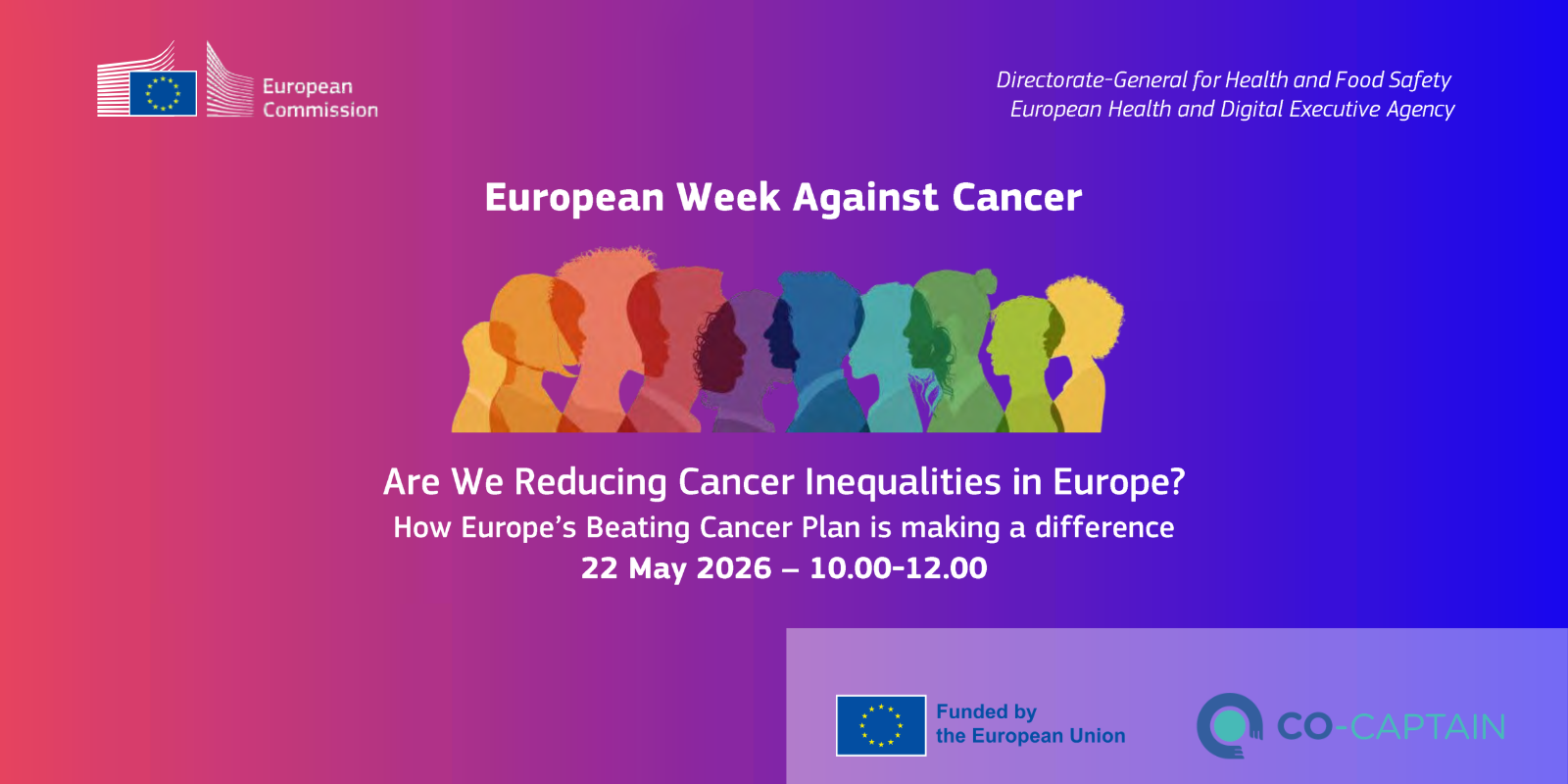
On 22 May 2026, on the eve of the European Week Against Cancer, DG SANTE and HaDEA organised the webinar “Are We Reducing Cancer Inequalities in Europe? How Europe’s Beating Cancer Plan is making a difference”. The session explored how inequalities continue to shape the cancer pathway in Europe, from prevention and diagnosis to treatment, survivorship and quality of life.
Moderated by Tamsin Rose, the webinar opened with contributions from Olivér Várhelyi, Commissioner for Health and Animal Welfare, and Marc Tachelet from HaDEA. The discussion then followed the patient journey through different EU-funded initiatives, including HOPE4Kids, SHIELD, SOLACE, JA PCM and ALTHEA. Speakers included Judith Aris-Meijer, Clémentine Rialland, Torsten Blum, Marc Van den Bulcke and Ilaria Durosini, with closing remarks by Matthias Schuppe from DG SANTE.
A recurring message throughout the webinar was that Europe is making progress, but inequalities remain deeply embedded in cancer prevention and care. Speakers highlighted shared challenges across countries, including stigma, uneven access to services, differences in prevention uptake and the need for stronger cooperation between projects and health systems. As noted during the discussion, EU initiatives are working in parallel on similar barriers, making coordination and knowledge exchange essential for long-term impact.
Several interventions focused on how to make cancer care more personalised and equitable. The discussion around personalised cancer medicine underlined that innovation must benefit all people, not only those who already have good access to healthcare. Speakers also stressed the need to make project results sustainable beyond individual initiatives, suggesting that future joint actions and shared methodologies can help build continuity across Europe.
Mental health was another important theme. The session on quality of life and survivorship addressed the need for better psychological support for cancer patients and their families, including the potential of digital platforms and self-assessment tools to monitor emotional distress, cognitive needs and psychological wellbeing. However, speakers also warned that these tools must be integrated carefully into cancer pathways and supported by professionals, so that they reduce rather than increase inequalities.
The debate also touched on the role of artificial intelligence in cancer care. Participants pointed out that AI-based tools can only support equity if the data used to train them are representative of the populations they serve. Otherwise, there is a risk that innovation could reproduce existing inequalities, particularly when datasets fail to reflect differences in gender, ethnicity, geography or genomic diversity.
For CO-CAPTAIN, these discussions are highly relevant. The project focuses on reducing inequalities in cancer prevention for people experiencing mental ill-health, a group that often faces additional barriers in accessing preventive services. Through its Patient Navigation model, CO-CAPTAIN has explored how personalised support, continuity of care and better coordination between health, mental health and social services can make prevention more accessible.
The webinar reinforced a key message also emerging from CO-CAPTAIN: reducing cancer inequalities requires more than innovation alone. It requires integrated systems, inclusive policies and approaches designed around people’s real needs.